Rome, October 28, 2026 – Italian export-oriented enterprises consistently outperform non-exporting peers across core economic fundamentals, demonstrating higher total factor and labor productivity, aggressive R&D allocation, and accelerated capital deployment into workforce reskilling.
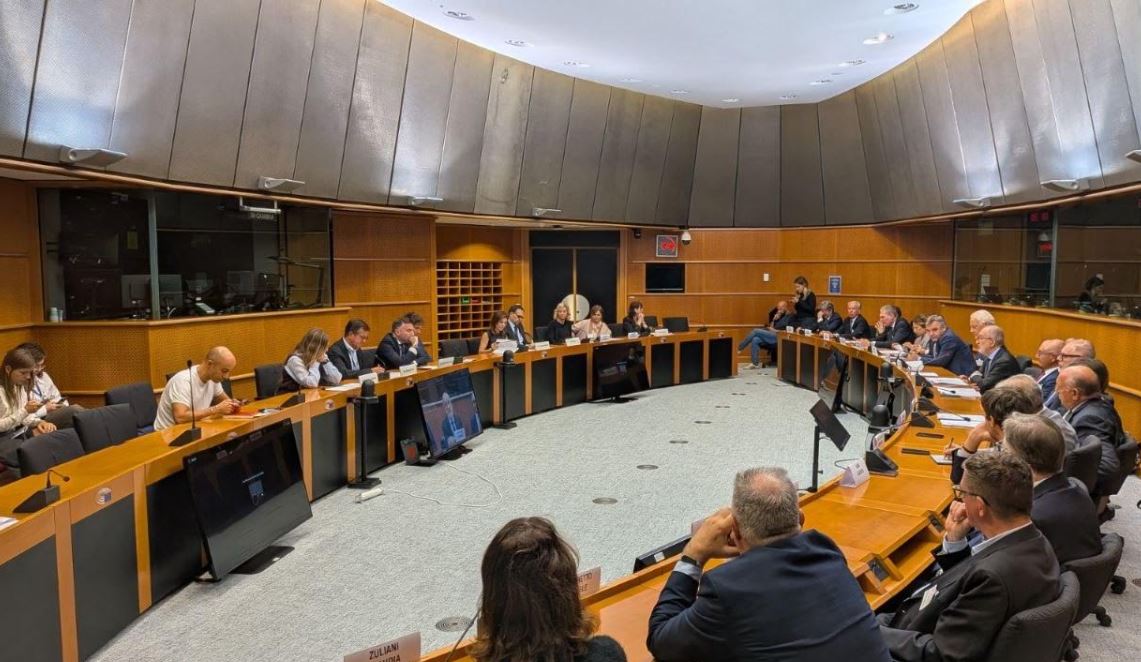
This analysis emerges from a 2026 empirical study conducted by Unioncamere and its research division, Centro Studi Tagliacarne, surveying a cross-sectional sample of 4,500 corporates. The findings were presented at the Chamber of Commerce Presidents’ Assembly in Rome, convened in the presence of Deputy Prime Minister and Minister of Foreign Affairs and International Cooperation, Antonio Tajani.
“The strategic objective underpinning the partnership between Unioncamere and the Ministry of Foreign Affairs (MAECI) is to expand Italy’s export base and consolidate corporate positioning across foreign markets,” stated Unioncamere President Andrea Prete. “We have identified a captive pipeline of approximately 20,000 high-potential enterprises positioned for cross-border expansion. Our capital and operational deployment will prioritize these firms, facilitating international scaling and direct access to high-growth global corridors.”
Productivity Premium and Forward Guidance
Controlling for corporate size, sector, and geographic footprint, export-oriented companies post an estimated 20% labor productivity premium over domestic-only competitors. Initial market entry generates an immediate operational efficiency boost: firms expanding abroad capture an average 6% baseline productivity increase compared to their purely domestic operational profile.
This structural moat underpins positive forward revenue expectations, with 33% of exporters projecting top-line expansion in 2027, versus 22% among non-exporting firms. This performance delta directly guides balance-sheet capital expenditures. Across the 2026–2028 planning horizon, 43% of exporters have targeted R&D capital expenditure, compared to just 16% among domestic peers. For Industry 4.0 and advanced manufacturing technologies, allocation rates stand at 51% versus 28%, while green transition capex registers at 47% compared to 28%.
Human Capital and Technological Adoption
Exporting firms aggressively prioritize talent retention and workforce capability: 61% budget dedicated corporate reskilling programs, versus 48% among non-exporters. Furthermore, 20% plan to hire specialized, high-tier technical profiles—more than double the 9% intake rate of domestic-focused enterprises. In terms of technology integration, artificial intelligence adoption shows a clear operational divergence: 26% of exporting firms currently leverage enterprise AI solutions in active workflows, compared to 19% among non-exporting peers.
The Latent Exporter Pipeline
Unioncamere has screened an addressable universe of roughly 20,000 domestic corporates meeting standard financial and operational benchmarks for cross-border scale that have not yet launched overseas operations. On a relative basis, untapped market potential is concentrated in Southern Italy: the South shows a ratio of 21 prospective exporters for every 100 established market players, outperforming the Central-Northern benchmark of 13 per 100.
Chamber Advisory Services: ROI and Performance Impact
Econometric impact analysis tracking corporates utilizing Chamber of Commerce cross-border advisory and export enablement platforms delivers actionable evidence of value creation:
-
Over the 2020–2024 tracking period, supported entities demonstrated a 41.4% higher probability of market origination (transitioning from non-export to active export status) relative to untreated peer control groups.
-
The realized export run-rate of participating firms stood 21.8% higher than unassisted peers, generating an aggregate estimated export upside of €600M to €800M in incremental cross-border revenue.
-
Regional outperformance was most pronounced across Southern Italy, where supported enterprises captured a +65.3% increase in realized export volume—nearly triple the national baseline impact.