A response to the new challenges facing UNESCO territories: the growth of cultural tourism, with villages and rural areas rightfully becoming part of the country’s tourism offerings, but also overtourism, climate change, depopulation of inland areas, and increasing pressure on local services.
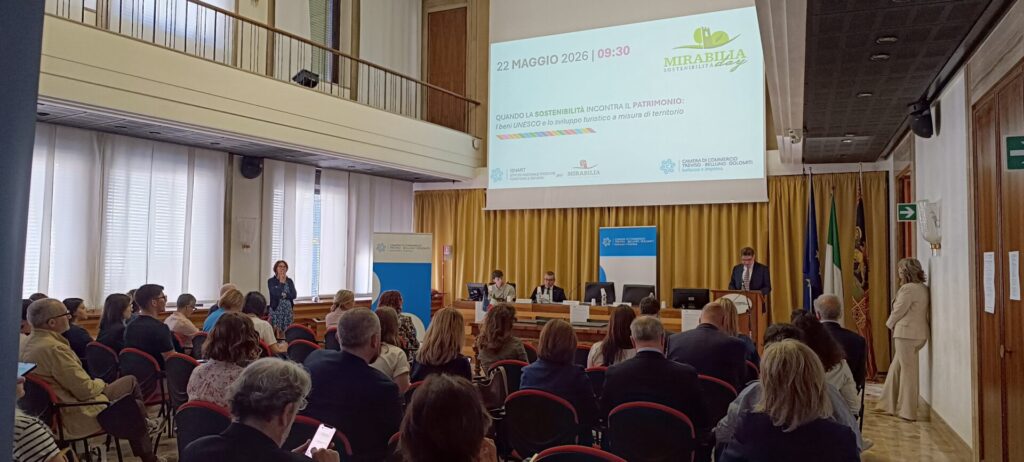
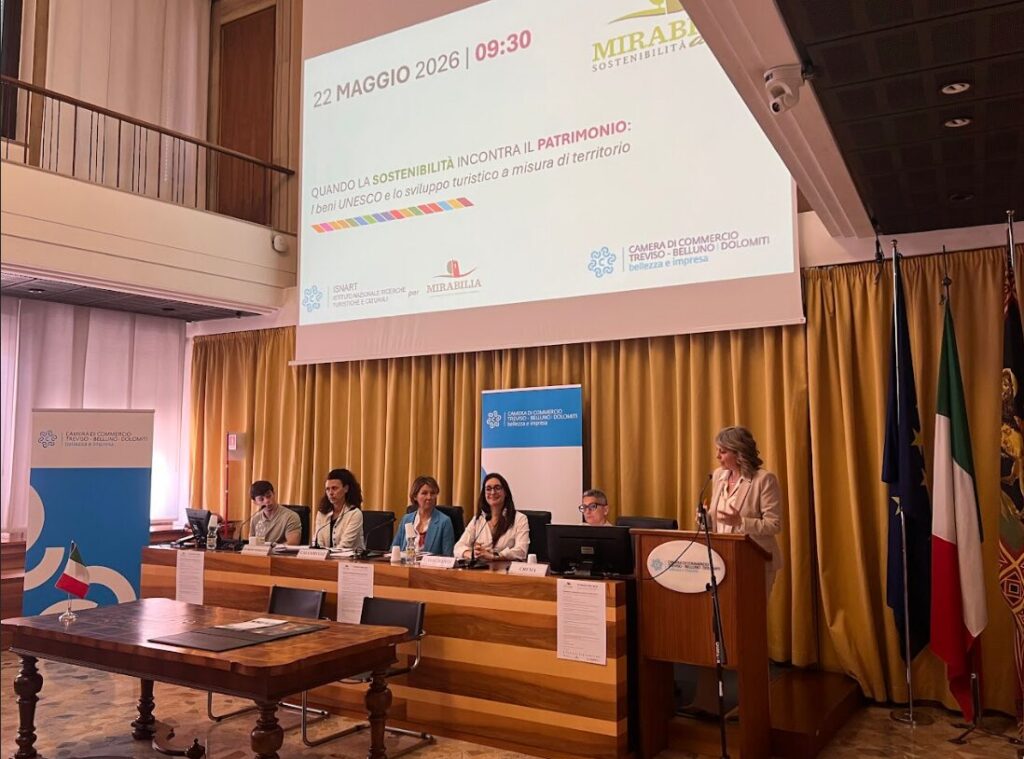
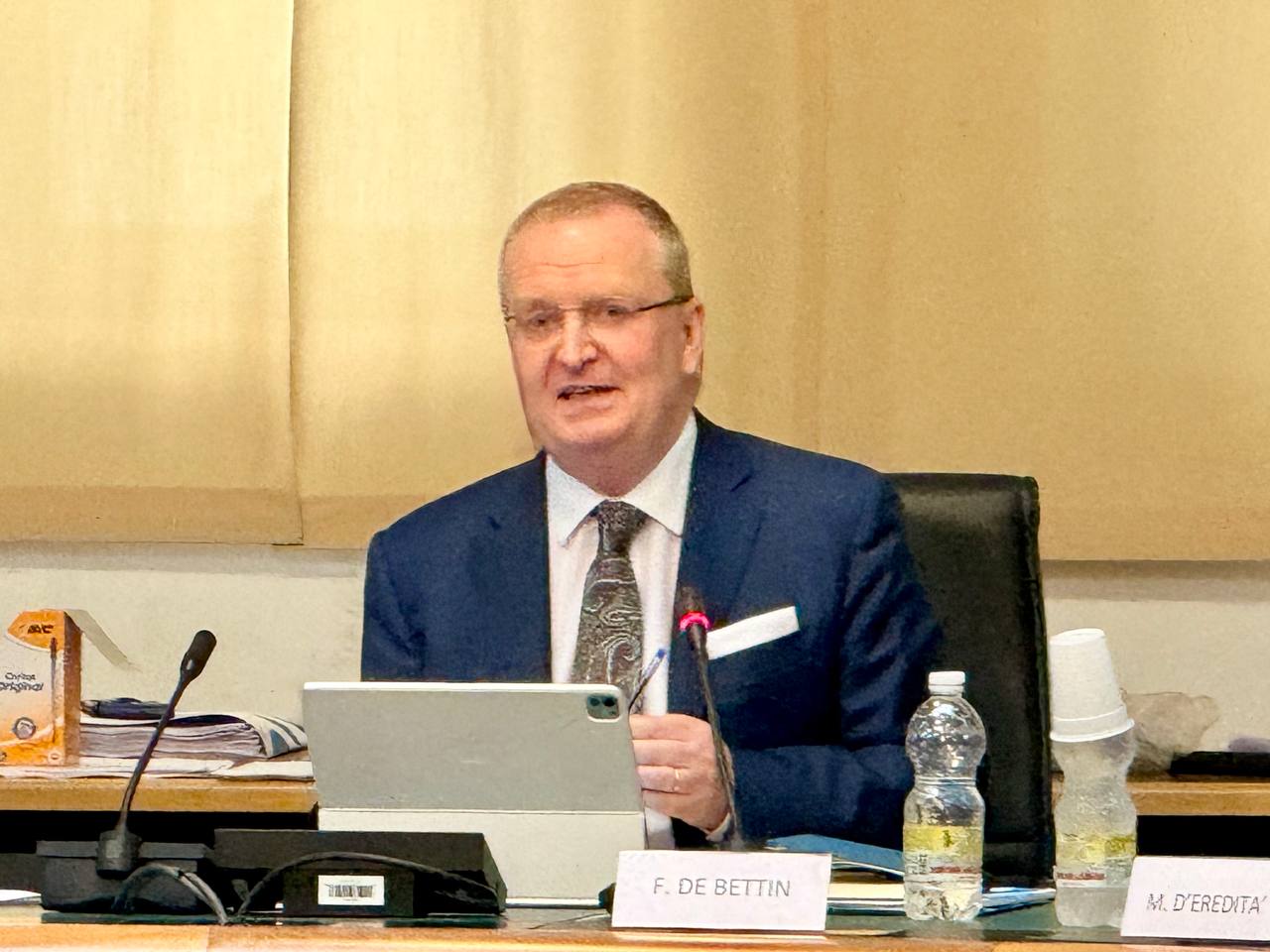
Preserving Italy’s great beauty from the effects of its own success. This is the challenge at the heart of the event “When Sustainability Meets Heritage: UNESCO Sites and Tourism Development Tailored to the Local Context,” which took place on Friday, May 22, in Treviso, at the headquarters of the Treviso-Belluno Chamber of Commerce, organized by the Chamber itself and Isnart (National Institute for Tourism and Cultural Research), as part of the activities planned for the 2025/2026 edition of the Mirabilia Special Project, promoted by 22 Italian Chambers of Commerce together with Unioncamere. Today, the issue is no longer merely the protection of individual UNESCO sites, but the preservation of the overall balance of the territories that host them.
The number of cultural tourists is constantly growing: for the fourth consecutive year, culture is the primary reason foreigners visit our country, accounting for 45% of international visitors on its own (Data from Isnart/Observatory on the Economy of Tourism of the Chambers of Commerce), while at UNESCO sites, the increase in visitors is 14.87% (change from 2023 to 2024, Source: Unitelma Sapienza University of Rome). However, growth must be guided: villages and rural areas are becoming an active part of the tourism offering, and issues such as overtourism, climate change, urban development pressure, and depopulation of inland areas therefore call for a new approach: building models of sustainable tourism development capable of enhancing cultural heritage while balancing it with the quality of life of local communities and the identity of these places.
With this objective in mind, the focus of the proceedings was the presentation of the National Charter for the Sustainability of Destinations Hosting a UNESCO Site, a tool developed by Isnart to guide destinations toward sustainable development models by promoting cultural heritage, local communities, and supply chain systems, and serving as a coordination framework to align regional sustainability policies with UNESCO principles and guidelines, with the aim of providing shared tools to analyze, monitor, and improve the sustainability of tourist destinations. The event brought together institutional representatives, local administrators, experts and operators from the cultural and tourism sectors, and management authorities of UNESCO sites to discuss the strategies necessary to ensure balanced growth in destinations that host heritage sites of internationally recognized importance.
The numbers clearly illustrate the significance of these areas: the Mirabilia project involves nearly 600 municipalities and 24 UNESCO sites, which, while accounting for about 7% of Italian municipalities, generate 19% of the country’s tourist visits (source: Centro Studi Tagliacarne).
In this context, the Charter serves as a veritable “toolkit” for Chambers of Commerce, local governments, and economic operators. It is based on a model centered on the three fundamental dimensions of sustainability—environmental, economic, and social — to which the cultural dimension has been added. This cultural dimension becomes essential when sustainability is applied to regions home to UNESCO-recognized sites. Particular attention is given to territorial governance, which must operate in an integrated manner, analyzed through indicators that allow for the monitoring of aspects such as tourism pressure, land consumption, environmental quality, employment, the vitality of cultural enterprises, accessibility, social inclusion, and visitor perception.
The Charter outlines a path toward gradual improvement, based on the sharing of data, tools, and best practices. In this context, a central role is assigned to the Chambers of Commerce participating in the Mirabilia Special Project, which are called upon to promote regional coordination, dialogue between institutions and businesses, and the dissemination of a viable model capable of effectively balancing development that brings prosperity to local communities with conservation efforts that ensure the preservation of cultural heritage, while also considering future generations.
During the morning, the session also delved into some of the key issues related to the sustainable management of tourist destinations, ranging from the strategies adopted for the 2026 Milan-Cortina Winter Olympics to the governance models implemented by DMOs that include UNESCO sites within their territories, and the use of European Copernicus data to protect cultural heritage from the effects of climate change. The day thus provided a broad and comprehensive discussion on the many dimensions that define the sustainability of tourism today.
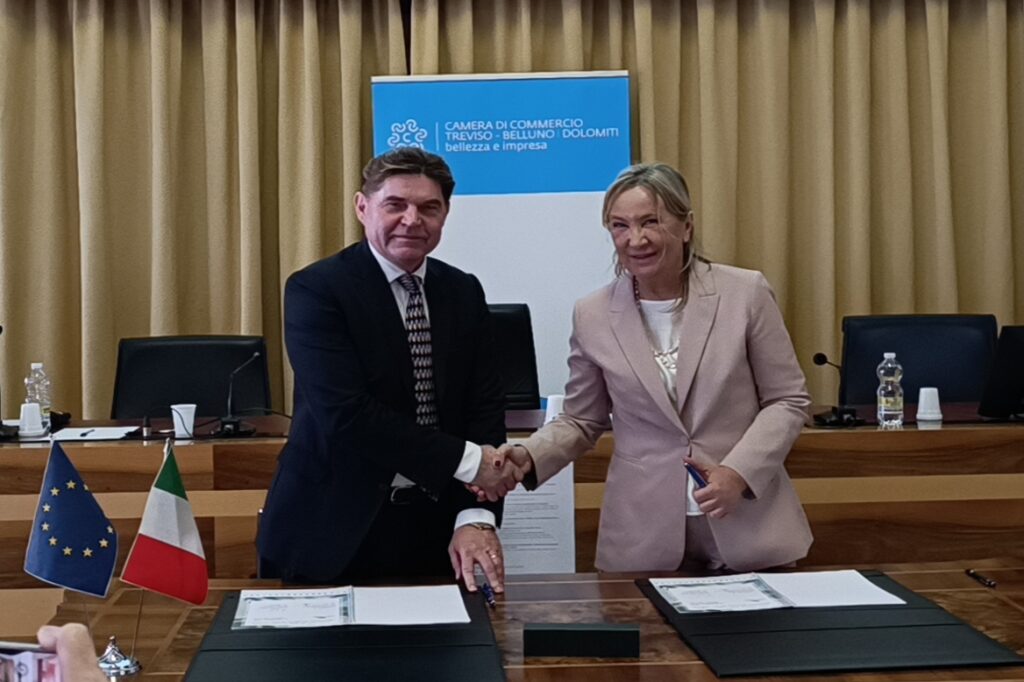
When we presented the Cison di Valmarino Sustainability Charter in 2022 -comments Mario Pozza, president of the Treviso-Belluno | Dolomiti Chamber of Commerce – we were convinced that this document could become a shared model. In fact, we also presented it at the European level to Ambassador Francesco Genuardi of the Italian Embassy in Brussels. Today, just a few years later, that intuition has been confirmed by the shared journey of the entire Mirabilia network and is now taking shape in a National Charter that summarizes what we have built together. It is deeply satisfying to see that what began in our region has fueled a collaborative effort capable of offering Italian Chambers of Commerce common guidelines for understanding and managing the sustainable tourism development of the UNESCO sites of which we are custodians. Today, here in Treviso, we are not merely celebrating an event: we are closing one circle and opening a larger one, because we are convinced that there can be no lasting growth without the ability to care for the extraordinary territories that the Mirabilia network represents.
Lucas Pavanetto, Vice President of the Veneto Region – Veneto is one of Europe’s major tourist destinations, and for this very reason, it has a duty to lead the shift toward a more balanced and sustainable growth model. Today, 80% of tourist visits to our region are concentrated in just 20 locations: a figure that clearly shows us that the challenge lies in better distributing opportunities. We must guide visitors in discovering a broader Veneto, one that also includes lesser-known but no less extraordinary places, villages, inland areas, cultural landscapes, and communities that preserve authentic identities. Sustainability, especially in areas home to UNESCO World Heritage sites, means precisely this: enhancing without depleting, creating widespread well-being, and ensuring that residents’ quality of life and the beauty of these places remain a legacy for future generations. The National Sustainability Charter represents a concrete tool to support this transition and build an increasingly informed and shared approach to tourism governance.
Why is it necessary today to revisit the issue of sustainability in regions with UNESCO sites? Because the context in which tourism operates has changed very rapidly and is constantly evolving – stated Loretta Credaro, president of Isnart – The Charter we presented today originated in these regions and is the result of work developed over time, in collaboration with the regions and the Chambers of Commerce of the Mirabilia network.” This work has involved dialogue, experimentation, and a progressive focus on a central theme: the sustainability of destinations, particularly those hosting a UNESCO site. This is a context that must not only be documented but also constantly monitored. Moving forward, this work will be made possible thanks to Isnart’s contribution, which has identified a method and tools to measure destinations’ tourism carrying capacity according to sustainability principles. The aim was to pave the way for the development of a National Charter that serves as a framework and foundation for equipping each destination “endowed” with a UNESCO site with its own sustainability charter, based on pillars shared with other destinations. And it is precisely for this reason that it is intended to be a useful, concrete, and above all, applicable tool.