Treviso, August 6, 2026 – .
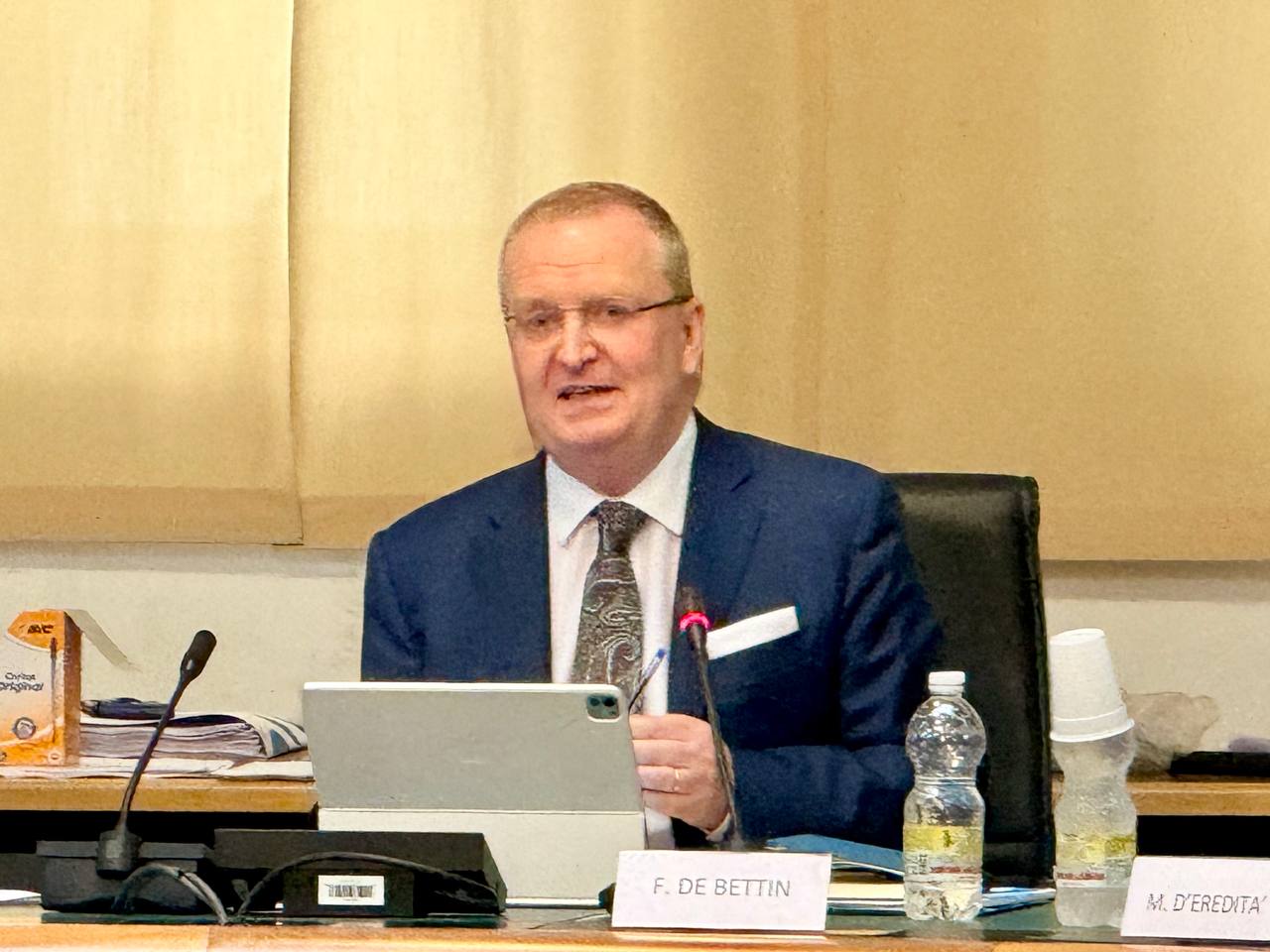
The comment of President Francesco De Bettin
Companies are adapting to the global context. But a broader strategic perspective is needed to seize the opportunities that are emerging in the new geoeconomy.


Economy - published on 10 August 2026
Source: Research and Statistics Office of the Treviso-Belluno|Dolomites Chamber of Commerce

Treviso, August 6, 2026 – .
The comment of President Francesco De Bettin
Companies are adapting to the global context. But a broader strategic perspective is needed to seize the opportunities that are emerging in the new geoeconomy.

The Unioncamere del Veneto survey on manufacturing trends in the second quarter of 2026 highlights positive economic developments: in Treviso, production rebounded by +4.9% compared to the previous quarter, sustaining a year-over-year growth trend of +2.8%; in Belluno, the quarter-over-quarter change in production was +3.2%, resulting in a year-over-year growth trend of +2.5%. Capacity utilization increased in both provinces, and the production horizon guaranteed by the order backlog has lengthened. The Veneto manufacturing industry demonstrates an extraordinary ability to adapt to the uncertain global environment, but – as Francesco De Bettin, the new President of the Treviso-Belluno|Dolomiti Chamber of Commerce, is quick to point out — I believe it is appropriate to provide some additional context to help understand the reasons behind these results.
These positive figures are the result of a unique combination of factors: the tail end of spending linked to the PNRR, a favorable international cycle for the renewal of machinery and Industry 5.0 technologies—paradoxically fueled precisely by the global uncertainty that is driving the need to upgrade intelligence systems related to production processes (as well as by the initial effects in Italy of the implementation of hyper-amortization). Key supply chains that have faced difficulties in the past are rebounding: the Stellantis Group’s relaunch of production in Italy is also benefiting local companies involved in automotive components; the wood furniture sector is rebounding, particularly in the high-end and contract markets. Furthermore – adds De Bettin, – we cannot rule out that during the quarter in question—aided by the temporary easing of inflationary pressure—some companies may have acted preemptively on inventory and orders, using the uncertainty to their advantage and thereby preventing potential supply disruptions and increases in production costs. It is a combination of factors that our manufacturing sector has been able to exploit intelligently (the data prove this beyond a doubt), but this should not lead us to draw overly optimistic conclusions.
After all – the President immediately points out, – the forecasts of Veneto-based entrepreneurs for the third quarter of 2026 are marked by the utmost caution.
They don’t see a “bleak” outlook, but they mainly expect current levels to remain stable. Regarding order intake, in particular, the data is very telling: 40% of those surveyed expect conditions to remain stable.
In my opinion – continues De Bettin – speaking as someone who views these scenarios through the lens of my professional experience to date, we can build a future that is less uncertain and less subject to external forces if we manage to be more ambitious and take a more active role in shaping the new geo-economy. I’ll take up and make my own an example that’s been widely discussed in the press in recent days. The disastrous crisis in the Strait of Hormuz has now turned that location into a global bottleneck, a potential permanent risk. The Gulf countries intend to invest to reduce its ability to block traffic. And logistics giants are already evaluating new routes and new logistics infrastructure. Well then: what active role can Italian industrial supply chains play in this challenge? Analysts believe that this new infrastructure cycle in the Gulf will require a range of expertise that Italy and our regions certainly possess: not only complex engineering, but also companies specializing in plant engineering, components, and environmental services. I believe this is truly an extraordinary opportunity, but — as the President urges — I would like our central institutions to make the most of it, particularly our commercial diplomacy. Then we, at the local level, will also see how we can act as facilitators.
But I’d like to make a second point, – adds De Bettin, – in light of the latest surge in fuel prices, which falls outside the scope of the quarter under review, that could undermine the economic rebound we’re highlighting today.
These additional costs for businesses and households should make us realize that a strategy based solely on resilience does not build a future: bringing forward demand, temporarily squeezing profit margins, not to mention the “band-aid solution” of cutting excise taxes, cannot constitute a long-term structural solution. From this perspective —and this is the key point De Bettin intends to emphasize — we truly need to address the issue of the energy transition in a serious, non-ideological manner: we must gradually free ourselves from our dependence on fossil fuels, but, as I have long argued, we need an integrated approach based on the use of a balanced energy mix (solar, hydroelectric, biomass, biogas, hydrogen, and innovative energy carriers). This involves strengthening the CERs that have been launched across the country in recent years to balance self-generation and consumption. But — as De Bettin points out — I believe it is especially important to build supply chains around this energy transition model, starting with energy storage technologies, to compensate for the inherent intermittency of renewables. China is doing just that. But we have world-class institutions right here at home, such as the Department of Industrial Engineering at the University of Padua. Just a few days ago, one of its professors, Prof. Vito Di Noto, a pioneer and founder of the Padua school of electrochemical energy storage and conversion, received a prestigious award from the Electrochemical Society, the most authoritative international scientific society in the field of electrochemistry. There are already positive relationships between the Department and the local manufacturing sector. But I believe the way forward can only be to strengthen these types of interactions: it is these, I reiterate, that create positive change and secure our future – concludes Francesco De Bettin, President of the Treviso-Belluno|Dolomiti Chamber of Commerce.