Below are highlights of some of the activities undertaken and previews of a few of the events planned for 2025.
Certifications
This year, the Chamber of Commerce obtained the Certification for Gender Equality.
Chamber Headquarters
The President announced that the urban planning amendment process for the Chamber’s headquarters has been completed. Consequently, the construction phase will now begin. During the first part of the year, some office staff will be relocated to other premises, while in the autumn, the remaining staff will move to spaces provided by the municipal administration in the city.
Energy Community
Treviso is also preparing to establish its own energy community, to which the Chamber of Commerce has already committed its participation.
Tourism
The President announced that the Fondazione Marca Treviso, responsible for managing tourist reception in the provinces, will undergo a structural change. It will transform into a public instrument governed by the Chamber of Commerce and, at last, by all the municipalities within the province.
Internationalization
In 2025 (Treviso, from October 6 to 8) will take place the IX FORO PYMES ITALIA – AMERICA LATINA, the Italian-Latin American Forum on SMEs. This initiative, promoted by the Italo-Latin American International Organization (IILA) and financed by MAECI, aims to promote our businesses and showcase the small and medium-sized enterprise model.
Olympic and Paralympic Games
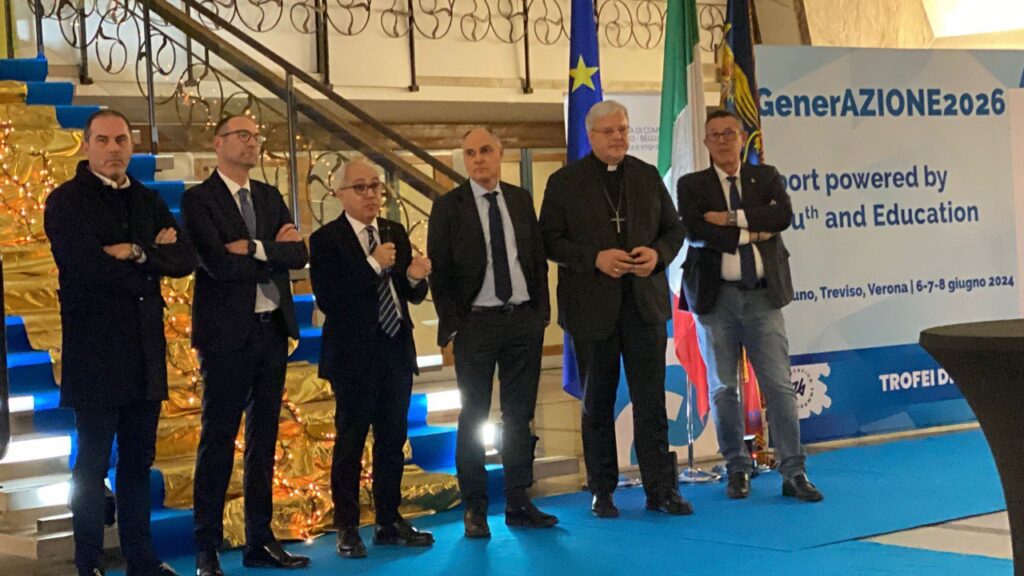
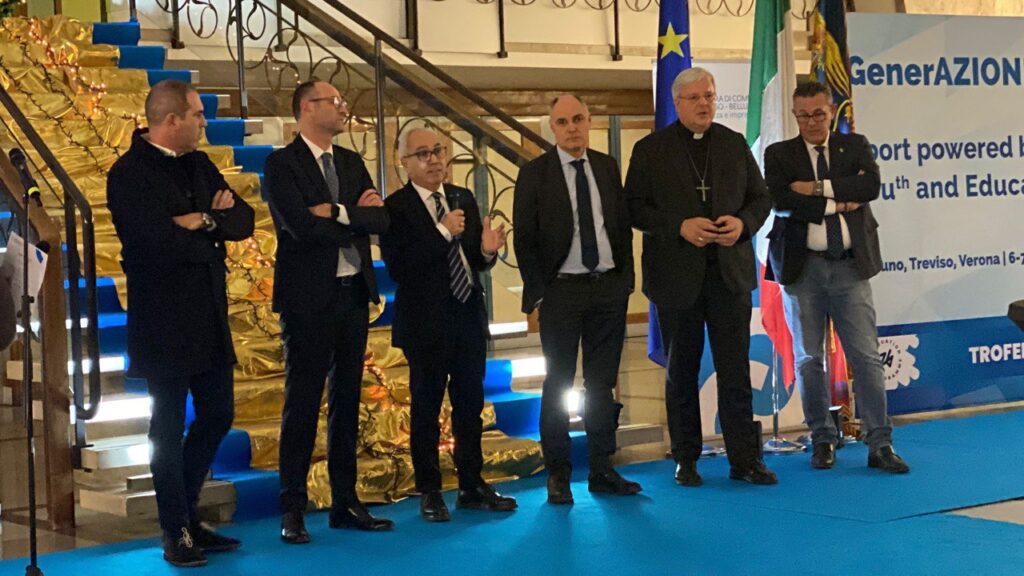
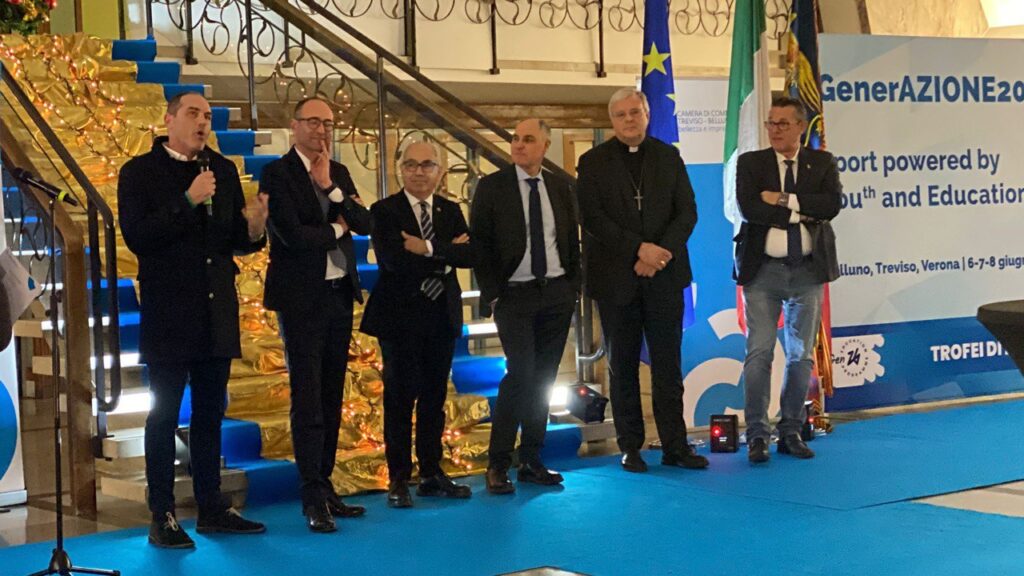
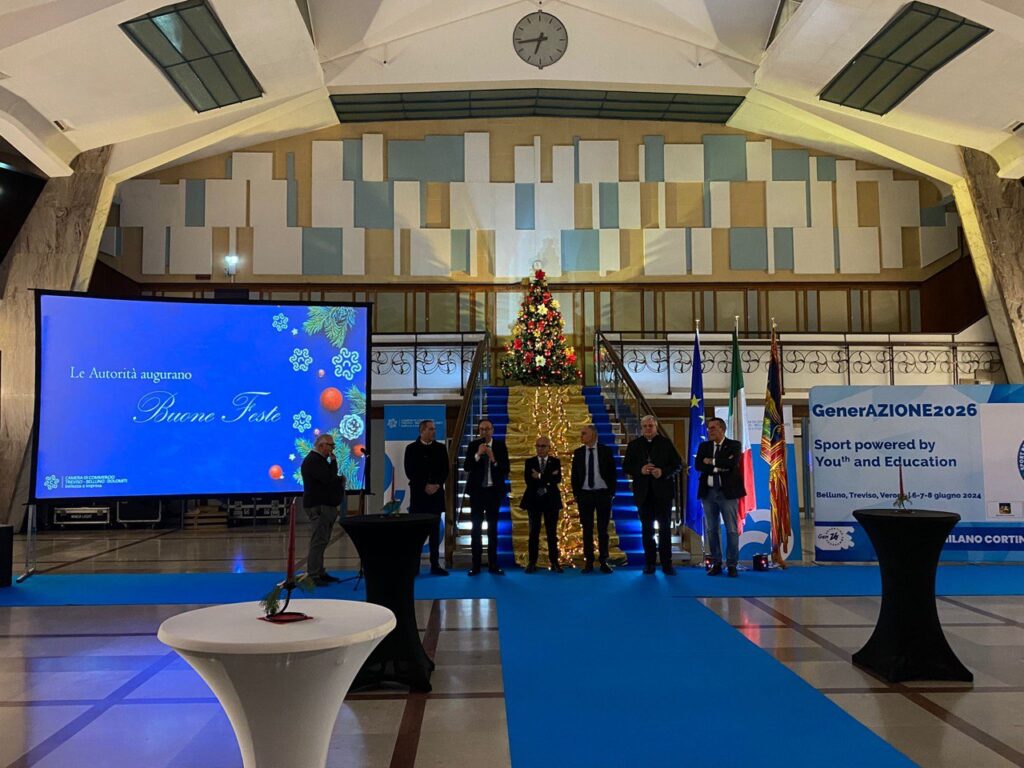
The fourth edition of GenerAZIONE2026 will take place in 2025. This educational project, which is part of the “Education Gen26” program of the Milan-Cortina 2026 Foundation, officially recognizes FICTS activities in schools and establishes the organization as a partner of the Chambers of Commerce and the Veneto Region for implementing the project.
The 2025 program, in anticipation of the Milan-Cortina 2026 Olympic and Paralympic Games, is expected to have a significant media, tourism, and economic impact. This will contribute to promoting the image of the territory, driven by the efforts of the Chambers of Commerce.
The driving force behind this initiative is the involvement of schools, school administrators, teachers, and the energy, motivation, and creativity of young students. Participants in the project will play a key role in a major event during the Milan-Cortina 2026 Games.
Youth Employment
The Chamber of Commerce supports the integration of graduates into the workforce by enabling agreements with businesses and public administrations to promote internships. These internships are 50% funded by the Chamber of Commerce. This investment has successfully transformed internships into job opportunities while fostering the growth of businesses and public administrations.
Below are the funds allocated by the Chamber of Commerce for promotional initiatives in 2024, aligned with the strategic objectives of the 2021-2026 Strategic Program. The allocation is updated as of September 2024.
Strategic Objectives
| Strategic Objective |
Amount (€) |
| 1.1 – Digital and Technological Transition |
2,663,556.06 |
| 1.2 – Digitalization of Services and Administrative Simplification |
198,208.00 |
| 1.3 – Ecological Transition |
28,780.00 |
| 1.4 – Internationalization and Attraction of Foreign Investments |
905,641.42 |
| 1.5 – Support for Businesses and Trade Associations, Promotion of New Businesses and Startups, Female Entrepreneurship, Training and Employment for Youth and Women, Access to Credit, Overcoming Corporate Crises, Encouragement of Alternative Justice |
647,498.38 |
| 2.1 – Territorial and Local Economy Governance |
165,100.00 |
| 2.4 – Cultural and Tourism Attractiveness of the Territory |
871,836.14 |
| 2.5 – Market Protection and Legality |
42,000.00 |
| 3.3 – Continuous Improvement: Service Quality, Logistics, Technology |
18,300.00 |
| Total |
5,540,920.00 |
Reflections on the Manufacturing Sector Conjuncture
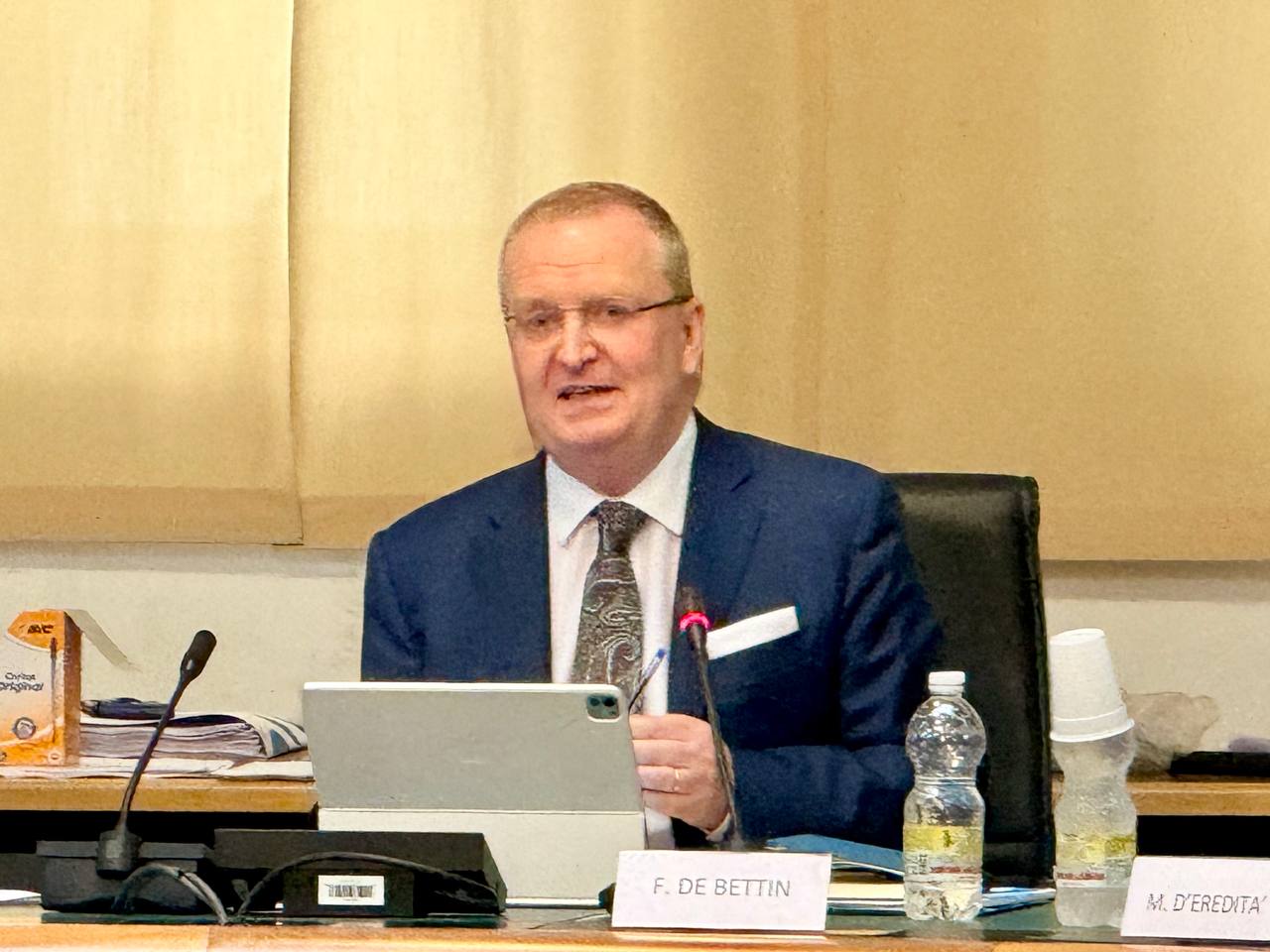
The President of the Chamber of Commerce of Treviso-Belluno, Mario Pozza, highlighted a brief analysis, which is presented here in full for further consideration.
The economic scenario continues to be marked by persistent weakness in international demand, compounded by the automotive crisis and the broader German recession. The German market remains our primary reference, absorbing 13.8% of regional exports, valued at €11.3 billion (€2.3 billion from Treviso and nearly €500 million from Belluno). It is important to clarify that, fortunately, not all sectors are impacted by the downturn. The agri-food sector continues to grow, the wood-furniture industry is showing signs of a recovery in demand, and the electrical equipment industry is also holding steady. Thanks to the balancing effect of these differing sectoral trends, industrial production overall limited its decline to -1.9% year-on-year for the quarter under review. However, a significant disparity has emerged between sectors that are stable and those facing challenges, such as the fashion system and the entire automotive supply chain, which are causes of significant concern.
The fashion sector, President Pozza explained, experienced the steepest production decline in the quarter under review, at -7.1% year-on-year. This is due to reduced household spending, driven by rising prices, as well as a broader shift in consumption toward services (travel, entertainment, health) rather than non-durable goods.
Regarding the automotive sector, Pozza continued, the decline in production is around -4.0%. It is now crucial to understand the scope of this crisis and how deep and widespread its impact may be on our businesses. In Veneto, as well as in Treviso province, many companies are part of the automotive supply chain. Specifically, 528 facilities in Veneto (116 in Treviso) operate in this sector, employing approximately 7,000 workers (1,800 in Treviso). These companies generate €1.5 billion in regional exports, with nearly €300 million destined for the German market and another €270 million in semi-finished goods shipped to Central and Eastern Europe (including Austria), where many Tier 1 suppliers for the German automotive industry operate.
However, Pozza emphasized, these figures are likely underestimated, as they do not account for many metalworking, plastics, and electrical or electronic component companies officially classified in other sectors but also engaged in automotive-related business. For instance, the Quero foundry, which invested heavily in electric motor components, is now in crisis and could lay off half its workforce.
For some time, Pozza stated, I have argued that the EU’s decision to ban internal combustion engines and focus exclusively on electric mobility was overly hasty and ideological. Markets and technologies were not ready.
Moreover, there is a broader issue of European industry competitiveness, further exacerbated by the European Central Bank’s excessive caution in lowering interest rates. Months ago, Bank of Italy Governor Fabio Panetta warned the ECB about the need to manage the pace of interest rate reductions carefully to avoid suppressing demand. That time has now passed, Pozza observed, looking at the data from our survey. Even an industry as robust as machinery manufacturing is feeling the effects of this uncertain climate, high borrowing costs that delay investments, and the delay in implementing the government’s announced Transition 5.0 Plan.
It is time for decisions, Pozza concluded. Our entrepreneurs’ forecasts still show too much uncertainty about demand. The labor market has held up so far, but for how much longer? Negative employment balances are emerging in the fashion system and the automotive sector, as confirmed by Veneto Lavoro.
Decisions are needed, especially at the European Union level, Pozza emphasized, if we are to continue believing in the European integration project substantively and not just rhetorically. A new European policy is needed to support manufacturing, encompassing digital transformation and ecological transition but with prudent choices and timelines based on real market absorption capacities. It must also consider the glaring asymmetries in emissions between major global regions: China pollutes 4.5 times more than our continent. Worse still would be to create the impression among businesses and families that environmental efforts are merely “for the wealthy.”
If we want to promote business growth in these areas, Pozza continued, we must change the rules on “state aid.” If we are committed to certain objectives, we must ensure progress is not hindered. Proper public investment incentives, not doled out sparingly out of fear of “distorting competition,” can help our businesses make a faster competitive leap. Their competition is with the rest of the world, not just within Europe.
Research conducted in collaboration with Ca’ Foscari University in Venice, which we will use to enhance our PID offices, shows that the more we support digitalization and technological complexity in businesses, the more we enable them to compete internationally and develop sophisticated decision-making tools for diversification.
This reconsideration of competition rules to foster growth should also extend to reducing constraints on forming large industrial groups. This would allow them to compete equally with non-European multinationals, achieve sufficient financial critical mass to invest in significant technological and energy challenges, and address the delays Europe has accumulated compared to the rest of the world. As an entrepreneur from the artisan sector, I believe the presence of industrial champions within the European Union is essential and can have significant positive impacts on local areas, including small businesses.
European excellence motors need to multiply. It is time for Europe, with the new Commission, to wake up and adopt a new development vision. The Draghi report is a promising ticket for the future. But it’s time to embark on the journey. We need a new pace.
In Italy, too, we must shed the heavy financial burden of past misguided policies, such as the Superbonus, which will constrain fiscal policies for years.