Sportsystem Economic Observatory. Economic and social data for the Asolo and Montebelluna Sportsystem District, updated as of the first quarter of 2026

Sportsystem Foundation, in collaboration with the Treviso-Belluno|Dolomites Chamber of Commerce and Intesa Sanpaolo


Economy - published on 24 June 2026


Source: press office Sportsystem Foundation and Research Department of the Treviso-Belluno|Dolomites Chamber of Commerce

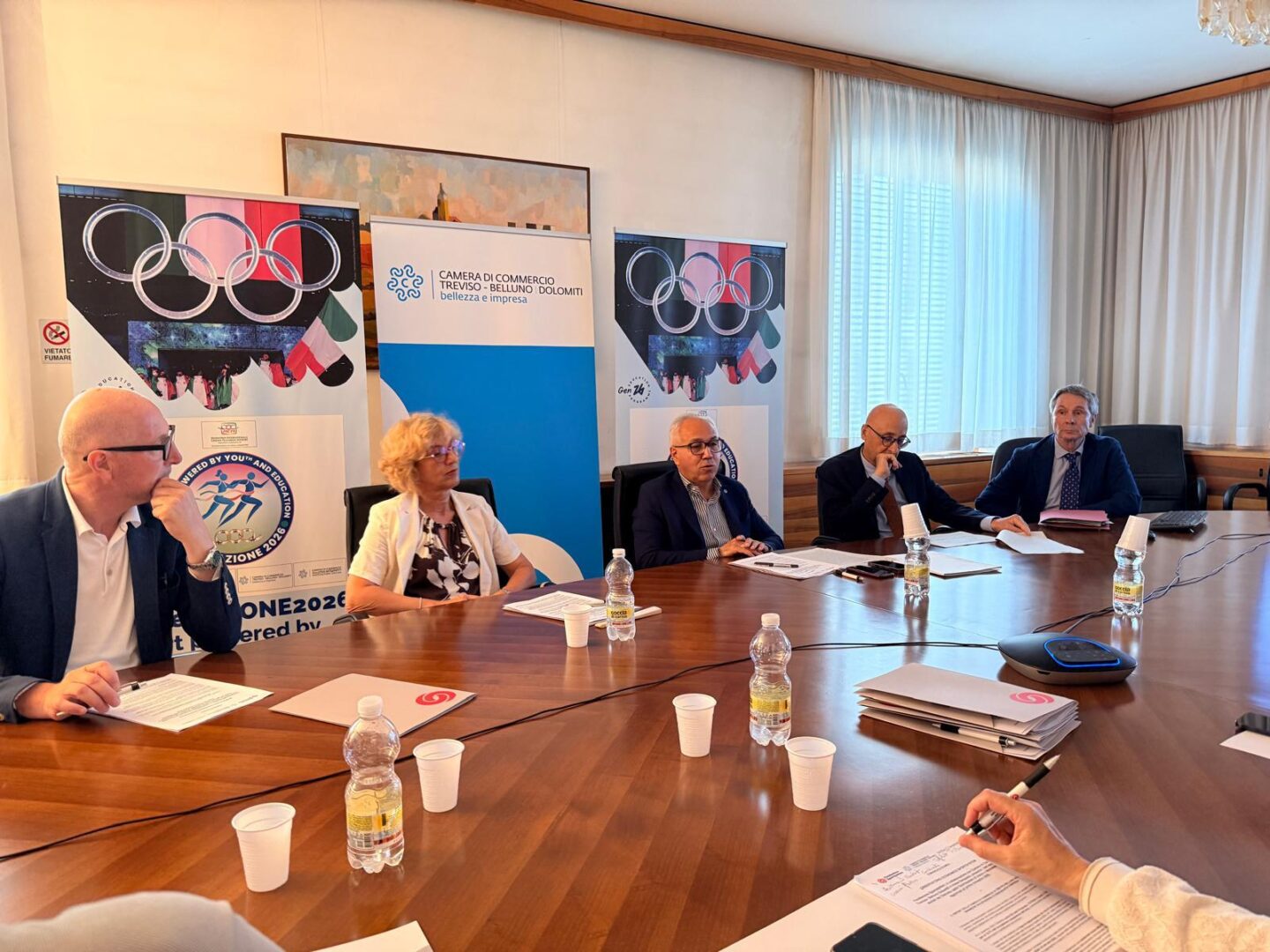
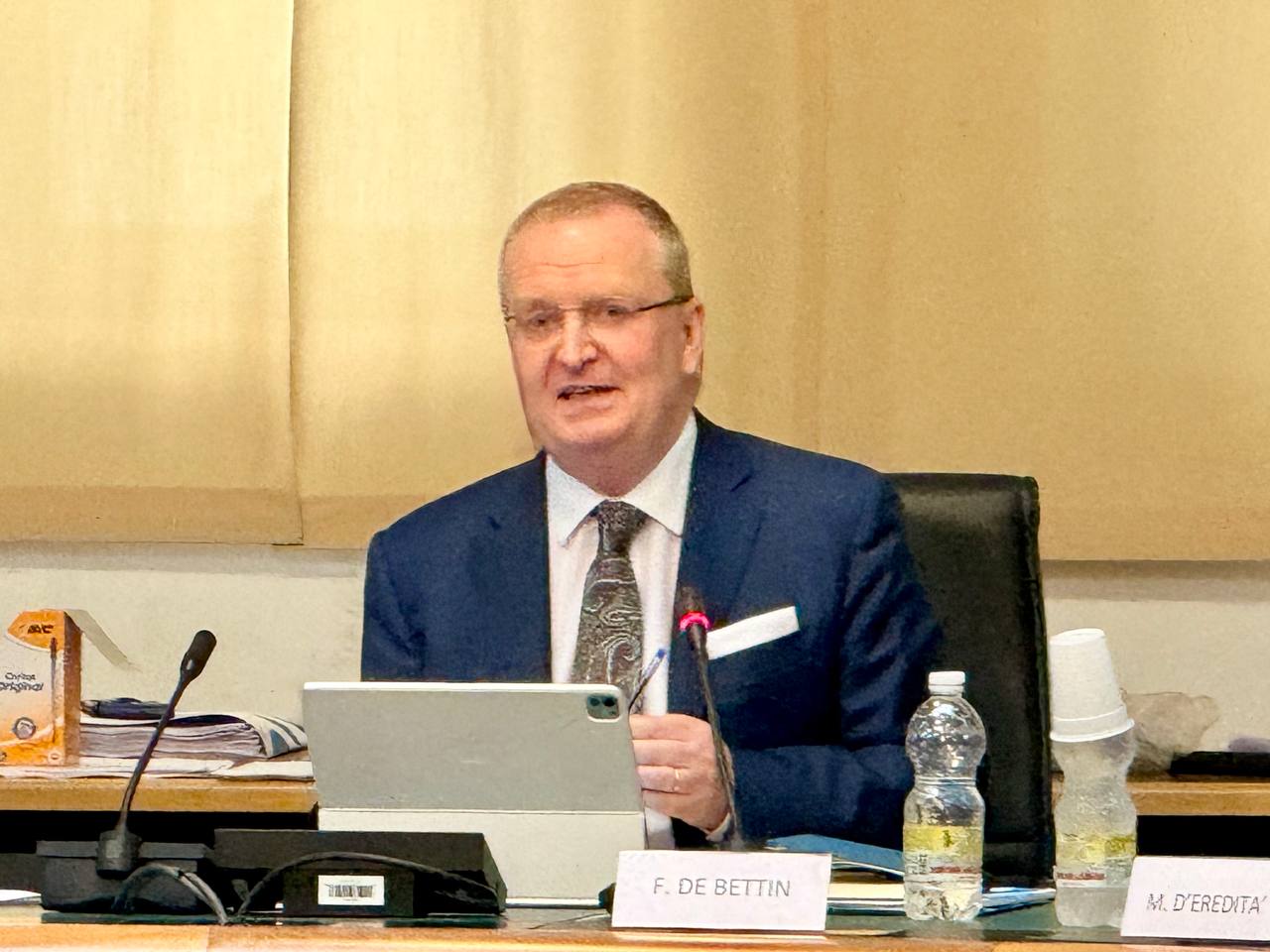
foto sala giunta con relatori e giornalisti attorno al tavolo grande ovale

Statement by Gianni Frasson, President of the Sportsystem Foundation

The data from our Observatory paint a picture of a District undergoing a transformation, marked by some short-term challenges and profound changes that must be viewed with clarity and, above all, with confidence. We can no longer think of a company that grows on its own: the times we live in call for joining forces, for creating critical mass to tackle investments, technologies, and markets that no one, acting alone, can fully afford to take on. Collaboration is the smartest way to protect and grow the “Made in Sportsystem” identity, and, along with it, the recognition and market positioning of all the companies that are part of it.

I’m thinking of the generational transition that’s struggling to take off, of small businesses that are shrinking while large-scale operations grow: these are real challenges, but they’re also an opportunity to innovate, not only in our products but in the very way we do business in our region. The Milan-Cortina Olympics, the increasingly close ties to mountain tourism, and new digital technologies: these are all open doors, and it’s up to us to have the courage to walk through them together.

It’s time to truly work as a team: between large and small businesses, across different generations, and between those who produce and those who innovate. I ask our companies to have the courage to look beyond their own boundaries, to combine expertise and visions, because only in this way can our District remain what it has always been: a place where passion for the product is transformed into excellence recognized around the world.

Statement by Mario Pozza, President of the Treviso-Belluno | Dolomites Chamber of Commerce

The Sportsystem district has long seen its value chain open up to the international market, a trend that has continued in recent years to drive the evolution of its productive fabric: growth in the number of branches, a shift in the entrepreneurial base toward medium- and large-sized businesses, and a push for change even among small businesses, all to keep pace with technological challenges and the need for greater, more versatile integration within the supply chain. All of this has taken place against a backdrop of stability, both in terms of the number of businesses and employment levels. The real structural risk we face is the generational issue: the entrepreneurial base is aging; 72% of partners, owners, or directors are over 50 years old, possessing distinctive know-how that has been the district’s main competitive advantage for decades but must now be passed on to the younger generations. New challenges, linked to technology and the related reorganization processes—call for new forces and new workforce energy. Among the levers for attracting new talent, I am certain that highlighting a productive fabric that is often underestimated is crucial: we are talking about multinational corporations, but also companies backed by private equity and investment funds, with headquarters integrated into international networks and direct access to global markets, capital, and expertise. The district represents companies with cutting-edge technology and sustainability-focused governance, capable of offering top-tier employee benefits and professional development opportunities, exactly what today’s younger generation considers a decisive factor in choosing a job. We need to extend this narrative to small businesses of excellence as well, helping them collaborate, seek greater competitiveness through networks, and manage business continuity with new tools. The Milan-Cortina 2026 Olympic and Paralympic Games served as a showcase for footwear and equipment designed or manufactured in the Sportsystem district, confirming a position of global leadership that few Italian manufacturing sectors can boast. The Sportsystem’s technological innovation and distinctive know-how remain a competitive asset of global significance.

Statement by Pietro Pelù, Commercial Director for Eastern Veneto and FVG at Intesa Sanpaolo

The companies in Montebelluna’s Sportsystem continue to demonstrate a strong ability to evolve and innovate, keeping the district competitive in international markets—thanks in part to major sporting events that strengthen the district’s international standing. In the current period of uncertainty, business growth is driven by innovation, the search for new materials, digitalization, and the transition to sustainability. As a bank, we support these transformation efforts with tailored solutions backed by specialized advisory services in the area of extraordinary financing to support growth, capital strengthening, and the evolution of governance structures. In the first quarter of 2026, we disbursed over 1 billion euros to households and businesses in the Northeast.
THE REPORT BY THE TREVISO-BELLUNO DOLOMITI CHAMBER OF COMMERCE. EMPLOYMENT TRENDS AND BUSINESS DEMOGRAPHICS

The Sportsystem District will continue to play a central role in the local economy in 2025, maintaining a diversified production structure, a strong employment presence, and an adaptability that continues to shape its evolution.

As of December 31, 2025, the District has 532 corporate headquarters, 173 branches, and nearly 7,700 employees, accounting for 16.7% of the area’s total employment, reaffirming its status as one of the region’s leading manufacturing sectors.

Analysis of the data reveals a phase of transformation rather than contraction. The decrease in the number of business locations compared to 2024 (-47) is in fact largely attributable to the automatic deregistration of inactive businesses, concentrated primarily among sole proprietorships in the textile and apparel sector. Net of this administrative phenomenon, a production system emerges that continues to consolidate and reorganize itself.

Furthermore, the process of evolution in the business structure continues, with steady growth in the number of branches (+9 in 2025 alone), a sign of the District’s ability to attract investment, foster mergers and acquisitions, and integrate into increasingly complex and international production networks.

On the employment front, the data show that the sector has remained largely stable in an economic context marked by a slowdown in international demand, geopolitical tensions, and profound technological changes. The slightly negative employment balance (a loss of 150 jobs in apparel and 20 in the core footwear sector, for a total decline of 1.7%) appears modest and should also be viewed in light of the innovation, digitization, and corporate reorganization processes currently affecting many companies in the sector.

Setting aside these dynamics, three interesting structural aspects can be highlighted regarding the sector’s corporate landscape.

The first aspect is the aforementioned steady growth in the number of subsidiaries (+9 even in 2025), the tip of the iceberg of a transformation that has been underway for several decades in the District, driven by the arrival of multinational corporations, private equity funds, or endogenous consolidation processes among companies.

In light of these changes in the command-and-control structures of Sportsystem companies, the strategic issue remains the ability of smaller firms to join forces, or at least integrate into a network—to achieve economies of scale in managing their functional specializations.

The second point to highlight is, in fact, the shift of the Sportsystem supply chain increasingly toward medium- to large-sized companies. Sixty percent of Sportsystem employees work for companies with at least 50 employees (by comparison, this figure drops to 43% for the non-Sportsystem manufacturing sector in the district).

Over the past decade (2015–2025), focusing solely on the core footwear sector (which has shown greater resilience than others), the 250–499-employee size category has grown particularly strongly (the share of employees in this category rose from 7.2% to 15.7%). There was also a slight increase in the 50–99-employee bracket (from 12.8% to 13.5%). Due in part to changes in the sector’s composition, though not exclusively, employment in small businesses fell from 44.9% to 38.8% (the analysis considered the 2–49-employee bracket, deliberately excluding single-employee businesses).

Finally, a third aspect should be noted: the entrepreneurial workforce is aging. Over the decade in question, again focusing on the footwear sector, the proportion of “directors, partners, or owners” aged 50–69 rose from 53% to 57%; those over 70 rose from 10% to 15%; entrepreneurs aged 30–49 fell from 35% to 25%. There is therefore a need to renew the entrepreneurial cycle, especially at the district level. Endogenous mergers may be a solution to ensure business continuity and retain know-how within the district. The challenge is to provide the necessary tools for this delicate process.

These questions become even more pressing when linked to the technological challenges of our time. Fortunately, the degree of digitalization of manufacturing companies is advancing, but it still faces a barrier in terms of company size (79% of companies with 50+ employees adopt complex digital technologies, compared to 46.5% in the 10-49 range).

However, this is no longer an option. For B2C companies, this greater complexity also determines a greater capacity for market diversification (more essential than ever in the era of tariffs), while for B2B companies and subcontractors, technology becomes an enabling factor for more versatile integration into supply chains, involving the entire management of the company: the redefinition of a service and value proposition (going well beyond manufacturing expertise) that can link them in an increasingly distinctive way to the needs of contractors.

INTESA SANPAOLO STUDIES. MONTEBELLUNA: EXPORT BETWEEN RESILIENCE, TOURISM, AND OLYMPIC OPPORTUNITIES

The Montebelluna Sportsystem confirms a good resilience capacity on foreign markets, despite a complex international context marked by strong differences between sectors and geographies.

In 2025, the district’s total exports stood at over 1.55 billion euros, with a slight decrease compared to the previous year (-1.1%), reflecting contrasting trends: on the one hand, the growth of sports equipment for winter sports and mountaineering equipment (+4.1%), and on the other, the decline in sports or other-use footwear (-2.3%) and bicycles and their components (-4.5%).

In the first three months of 2026, the picture appears substantially stable: exports amounted to 402 million euros, thanks to the positive contribution of bicycles and sports equipment, which offset the weakness of the footwear sector. Geographically, encouraging signs are emerging especially in some European markets, with Germany, Austria, and the Czech Republic in evidence, while the performance in markets such as the United States, Russia, and the United Kingdom remains more problematic.

The conflict in Iran has reshaped the geography of export growth opportunities. Among those expected to grow are precisely the markets where the district is most present, namely Eastern Europe and Western Europe. At the same time, there was a slowdown in sales in the Gulf countries, where an interesting expansion had been observed in 2025: in the United Arab Emirates, the 46% growth in 2025 (up to 8 million euros) was countered by a decline in the first quarter (-57.5%), probably attributable to the month of March alone. A similar dynamic was also observed in Saudi Arabia, but on lower values.

The major critical issues felt by companies following the conflict relate to the increase in energy, transport, and insurance costs, and initial tensions along supply chains. This resulted in a significant revision of investment projects, caused by uncertainty, worsening demand conditions, and rising interest rates. Furthermore, greater difficulties are emerging for smaller companies in defining appropriate strategic responses to the current context. In the district, the main vulnerabilities do not seem attributable either to financial solidity or to the level of liquidity—both of which are improving even among the smallest companies—but rather to the significant reduction in profitability, measured by the EBITDA margin, of companies active in the footwear sector, especially among smaller firms.

A boost to the District’s export dynamics can also come from the synergies that can be activated with mountain tourism and major international sporting events. The analysis highlights a possible link between the presence of foreign tourists in the Dolomites and the international demand for sports equipment produced in the District: the positive correlation between tourist arrivals from certain countries and exports of skis, boots, and other mountain equipment suggests the existence of a virtuous relationship between the tourist experience, territory visibility, and product recognition. In other words, tourist flows can become an accelerator for the profile of “Made in Sportsystem”, strengthening the commercial positioning in foreign markets closest to Alpine tourism, and opening up interesting opportunities for integrated promotion initiatives between the production system, tourist destinations, and the mountain supply chain.

In this perspective, the Milano Cortina 2026 Winter Olympics represent a potential multiplier of visibility and opportunities, especially for companies specializing in mountain and winter sports products. The quick survey conducted among the district’s companies shows that the direct impact on company turnover could manifest itself above all in the medium term, through a legacy consisting of greater recognition of the District, strengthening of local supply chains, new foreign customers, and new opportunities for collaboration between manufacturing, tourism, events, and the territory.

Courses and conferences

Economic Report

Economy

Events

news dall'Europa

News Europa

pagina

Promo

Senza categoria

Sport