Belluno, December 4, 2024
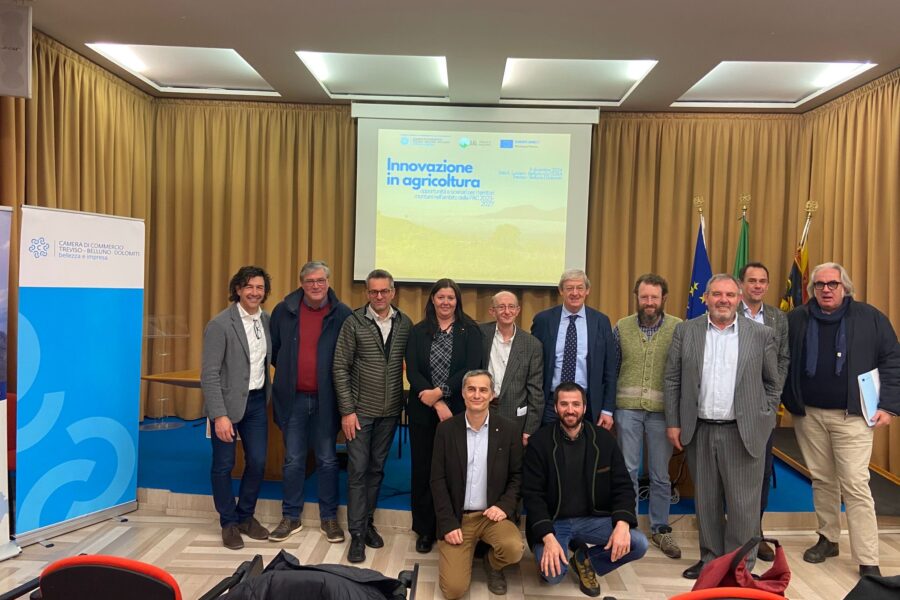
Innovation as a tool to attract young people to agriculture and promote generational renewal. This was the key message that emerged from the technical conference “Innovation in Agriculture: Opportunities and Scenarios for Mountain Territories within the CAP 2023-2027 Framework”, which showcased tools, approaches, and processes to implement innovative practices in the sector.
However, innovation does not merely mean adopting new technologies; it first and foremost involves embracing new models. It requires a fresh approach that brings together all stakeholders in the sector: farmers, academics, researchers, institutions, business representatives, and consumers. These actors, who have always played an important role, can now be organized in a systemic way.
This point was eloquently explained by Vladi Finotto, Associate Professor at the Venice School of Management at Ca’ Foscari University, when asked whether innovation in mountain agriculture is achievable. The solutions, he said, are many, provided they start from the needs of the territory and its businesses, rather than looking to distant models. Designing the agricultural Silicon Valley of the next 20 years is pointless when resources are lacking and innovative systems are incompatible with existing enterprises.
It is more effective to understand the constraints, problems, and realities of businesses and to support the system based on three principles, Finotto stated: First, identify promising experiments that can be codified, replicated, and applied elsewhere. Second, consider the practices of agricultural entrepreneurs. Third, transmit the acquired knowledge to other territorial or business contexts. The goal of an innovative process is to solve problems, generate knowledge, circulate it, and create value—making agricultural work economically viable.
This perspective was applied in the Sheep Up project, developed in the Belluno area to preserve four endangered sheep breeds, highlighted Enrico Sturaro, Associate Professor at the University of Padua. Despite its small scale, the project was selected as one of the 30 best European projects of 2024 by the EIP-Agri Innovation Award. The key is to create a working environment that transfers innovation to real-world contexts, as was also done in another project for measuring livestock emissions—not in laboratories, but using the living lab method, which operates on-site. Every academic or research center must meet three objectives: education, research, and knowledge transfer. The latter defines our relationship with the business world.
A concrete example was provided by Carlo Murer, who, through the cooperative Pascolando, has managed Malga Van in Limana. Here, innovation integrates social, environmental, and technological models while preserving traditional practices such as rotational grazing, zero-kilometer food production, community trust, and tourism attraction.
Finally, education remains fundamental, as noted by Ezio Busetto, Principal of the Della Lucia Agricultural Institute. There is significant investment in this sector and growing interest. We are at a historic peak of over 500 students enrolled. The implementation of innovative strategies within the institute relies on a networked approach involving businesses.
Innovation is one of the priorities of the Rural Development Program, and the European Commission encourages collaboration among various stakeholders. Alongside the CAP—the Common Agricultural Policy—the EU has established a funding channel for innovative projects in the primary sector. Notably, the chosen instrument is Horizon, the European program that finances research.
The conference “Innovation in Agriculture: Opportunities and Scenarios for Mountain Territories within the CAP 2023-2027 Framework” was organized by the Chamber of Commerce of Treviso-Belluno | Dolomiti and the Europe Direct Montagna Veneta Center. The initiative addressed challenges and opportunities for mountain agriculture, proposing innovative solutions for sustainable development in line with the European CAP priorities and the Agricultural Knowledge and Innovation System (AKIS).
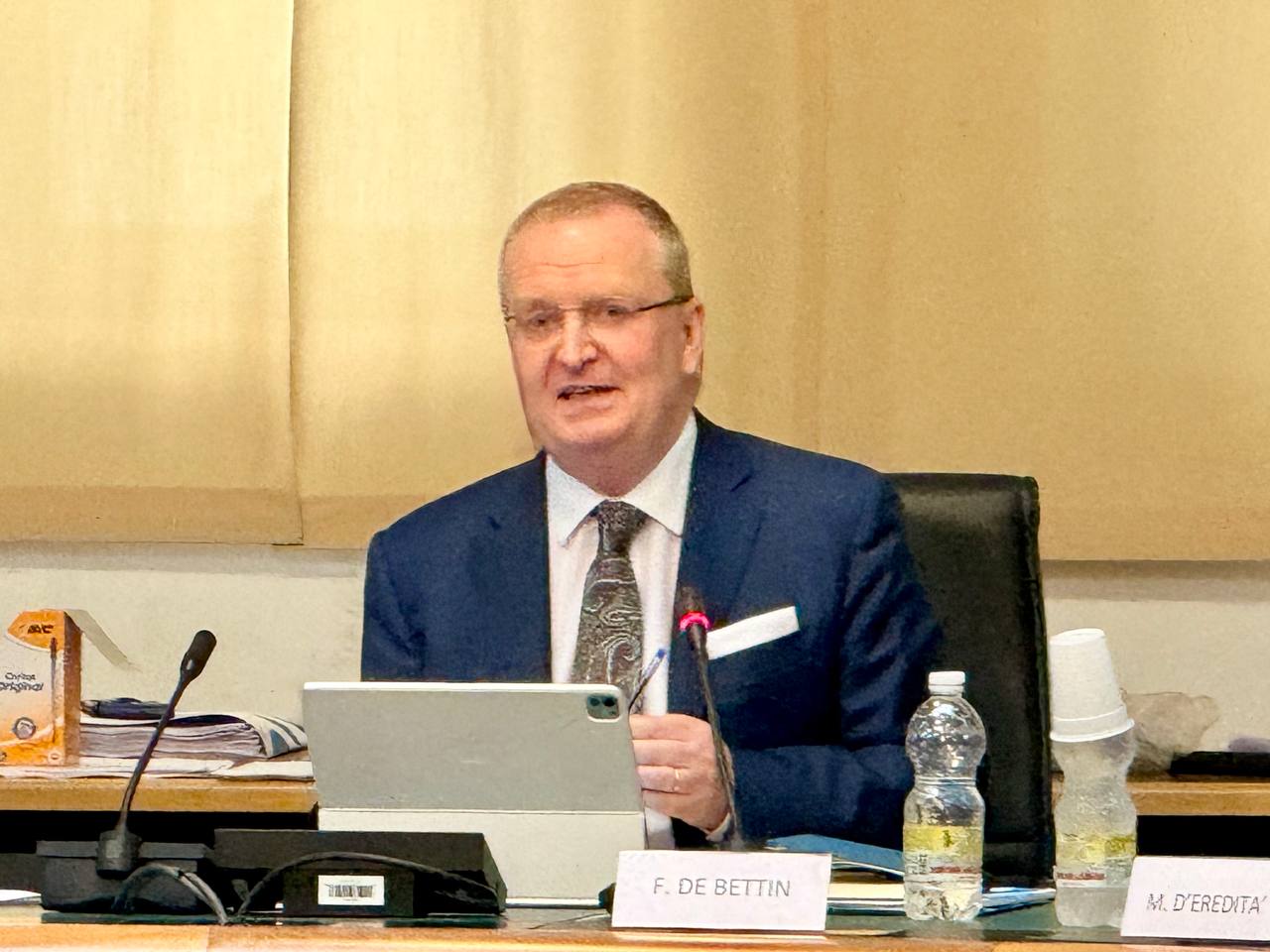
It is now evident, – declared Mario Pozza, President of the Chamber of Commerce of Treviso-Belluno | Dolomiti, that innovation—including the digital and ecological transition, which the Chamber is deeply committed to—represents an essential requirement for increasing competitiveness across all sectors, including the primary sector.
Our goal is to maintain the high quality of Made in Italy products, ensuring environmentally friendly and socially and economically sustainable production. This is especially true for the agricultural sector: combining excellence in products with innovative creativity is what makes Italian cuisine renowned—healthy and nutritious food of outstanding quality.
From 2021 to 2023, – Pozza continued, – the Chamber of Commerce of Treviso-Belluno | Dolomiti allocated over €2.3 million in non-repayable funds to support micro, small, and medium-sized enterprises in acquiring tools, services, and solutions focused on new digital skills and technologies. A total of 309 businesses benefited, including numerous agricultural companies that introduced significant innovations in production, processing, and product marketing thanks to our grants. Additionally, the Chamber supports numerous interventions and projects for the primary sector through its annual funding programs. This is why it is important to promote the message of the seminar ‘Innovation in Agriculture’, which emphasizes the exchange of knowledge among individuals, organizations, and institutions. As AKIS teaches us, enhancing skills becomes a critical factor for supporting growth and continuous improvement.
Events like this, – concluded President Pozza, – are essential for offering new perspectives on doing business in agriculture, particularly in mountain areas, and for encouraging young people to view the primary sector as a strategic and innovative field where they can commit themselves to building their future. A collective effort is needed to promote agriculture as a model of sustainability and innovation that enhances territories and the work of entrepreneurs, while using knowledge to address the challenges of the future.