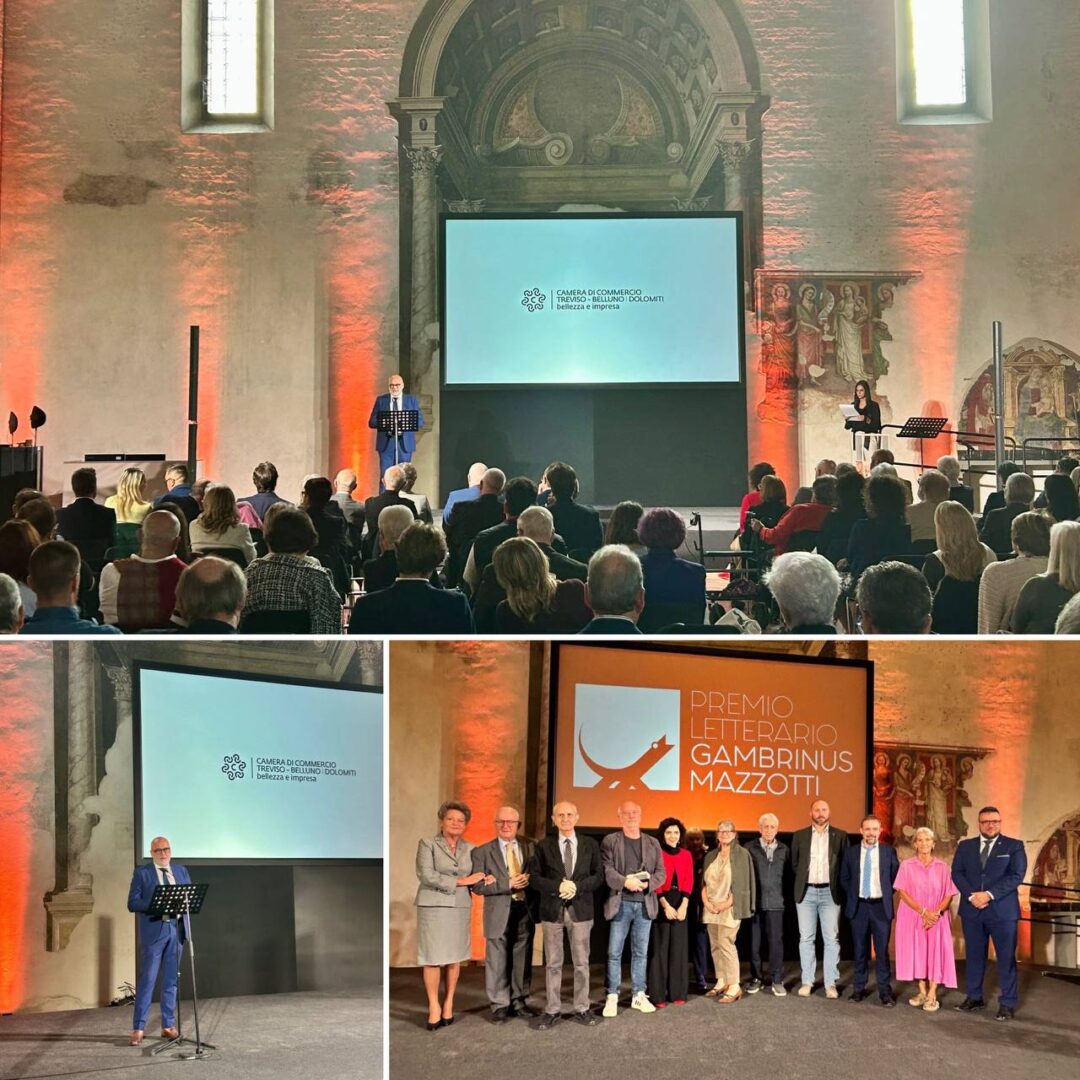
On March 27 at the Chamber of Commerce, an important conference was held with the presentation of territorial data, relating to the two provinces of Treviso and Belluno, regarding our positioning to achieve the objectives set by the UN 2030 Agenda, still far to reach at the global level. Since the subject is vital for the evaluations of those who intend to invest or work in Treviso, compared to the choice of any other alternative areas, we report some main contents for the Sections “Invest in Treviso and Belluno” and “How about working in Treviso and Belluno?”.
The European vision of sustainability and the positioning of the two provinces
Already in the institutional greetings of Ivo Nardi (Social Economic Observatory). Giorgio Santini (AsVeSS) and Romano Tiozzo (Chamber of Commerce) the main issues of the 2030 Agenda have emerged and the importance of monitoring them at territorial level, not only to know where we stand, but also to engage locally to achieve the goals set for 2030, that are certainly challenging and still facing many obstacles. Then, Roshan Borsato, professor at Ca’ Foscari University of Venice, highlighted EU strategies towards climate neutrality and digital leadership, in which we are at the forefront in the world with particular reference to industrial patents in all sustainable technologies (except in cloud computing and big data). The pillars of this digital transformation are the circular and sustainable economy; innovation and human capital, strengthening the strategic economy. The European plan for Sustainability still requires around 260 billion euros per year, while the digitalisation plan (mainly for connectivity and 5G network) estimates for around 65 billion euros per year. But these impressive public funding are not enough for the ambitious goals set for 2030 and therefore private investment must also be stimulated for a total of funds (public + private) of 750-800 billion annually (representing 4.4% to 4.7% of European GDP). In Italy, for the implementation of the National Action Programme for Policy Coherence for Sustainable Development, a multi-level governance is expected, also from the territorial aspect, and therefore it is important to know the local situation in depth, as it will be discussed at this conference.
The second report was delivered by Matteo Mascia, regional coordinator of AsVeSS (the Association in Veneto for Sustainable Development, linked to the National Alliance for Sustainable Development, ASviS), who focused on the main theme, relating to the positioning of Belluno and Treviso in relation to the objectives of the 2030 Agenda. As for the province of Treviso, no target will be achieved by that year, but we are moving in the right direction in terms of employment and those inactive (objective 8), urban waste per-capita (objective 12) and land use (objective 15). It is instead substantially stable (and therefore insufficient) the overcrowding index of the prisons (goal 16), while some indeces of respectively goals 5, 7 and 11 even move away from the target. On this last aspect and on others not investigated, however, everything depends on the availability and significance of some data, for which further surveys will be needed.
The trends in the province of Belluno, on the other hand, have shown more significant progress (so it Is assumed that some targets will be reached in 2030): electric energy from renewable sources (goal 7) and the daily containment of fine dust PM10 (goal 11). Progress on objectives 5, 8 and 15 is also heading in the right direction, while insufficient progress has been made on employment rates and a deterioration of some indicators on objectives 11, 12 and 16.
The first Focus was then held on young people and, in particular on NEET (Not in Education, Employment or Training), that is to say young people aged 15-29 who are neither studying nor working. This is a particular problem in advanced societies, where young unemployed people (who are looking for work and do not find it) are joined by (and are numerically superior to) those who are not studying or even seeking work for various reasons. These include not only people who face concrete obstacles to work due to health or family needs, but also people waiting for some future opportunity and especially young people engaged in non-formal activities (illegal or even illegal work). The total number of inactive young people in 2023 has been calculated in the following percentages (relative to their population):
- 2% on average in the 27 EU countries;
- 1% in Italy;
- 5% in Veneto;
- 6% in the province of Treviso;
- 2% in the province of Belluno.
From the territorial survey carried out, these are people of every social level (and not only disadvantaged or fragile people) and this situation depends on the territorial particularities, the more or less concrete help of families, but also from the individual attitude of each. With regard to the latter aspect, three aspects of subjects can be identified:
- Those who are confused and do not know how to find a suitable activity;
- Those who are distracted by various circumstances, but among which objective needs for family care also predominate, especially for women);
- The alienated, for discouragement or illegality.
The inactives are mainly: foreigners, women who are mothers or who have other family commitments and people with low educational qualifications. The remedies must be calibrated precisely on overcoming the difficulties inherent in these objectives situations. The topic was presented by Elisabetta Lamon, researcher at AsVess, and a best practice was also illustrated by Ivano Curtolo, coordinator of the project Cooperativa Sociale La Esse.
The second focus was on energy and its effect related to sustainability. Also in this case, a report on the subject was held by Federico Zanon, project manager at the Fondazione Fenice, accompanied by a practical description of some configurations of self-consumption of sustainable energy by Giovanni Piccoli, president of the Centro Studi in Belluno. The report presented data on renewable energy present in the two territories also in relation to their total energy consumption. In the province of Treviso, the coverage of production from renewable sources in 2022 was around 20% of consumption and consisted in the order from: hydroelectric, photovoltaic and bioenergy (but with only the photovoltaic growing). In Belluno, on the other hand, renewable energy has been even higher than local consumption by almost 150%, but in the past it was as high as 300%. This is obviously due to the alpine hydroelectric power plants, which were used even more in the past and which now continue to meet the overall local demand, while the additional production, also due to the growing presence of other renewables, is also exported to other parts of the country.
Therefore, the future prospects for Treviso must be identified in the expansion of photovoltaics, which obviously will also need large storage systems for the management of unprogrammable solar flows. For Belluno, on the other hand, given that the hydroelectric power is not expandable to an appreciable extent and that in any case the needs are already largely satisfied, an enhancement of forest resources for bioenergy purposes could also further increase the supply of renewables in other areas largely dominated by fossil fuels.
The conclusions of the conference were drawn by Renato Chahinian, former secretary general of the Chamber of Commerce of Treviso and author of the book “Agenda 2030: come fare. Integrare crescita economica, sviluppo sociale e sostenibilità ambientale”, (2030 Agenda: how to do it. Integrating economic growth, social development and environmental sustainability), published by Guerini e Associati (on this subject, consult the article on Trevisobellunosystem published on October 1st 2024). The lecturer summarised the main concepts emerging from the various contributions, stressing the importance of the analyses on territorial sustainability given that each territory has its own specific route to take in relation to its particular characteristics and the data can be very different from those circulating on the global, European and national cicumstances (which already differ a lot from one another). It should also be stressed that we cannot take on all the evils of the world and therefore each of us is primarily responsible for the sustainable positioning in its territory. The Chambers of Commerce are, thanks to their competence at provincial level, together with the Provinces, the most suitable entities to lead a sustainable local development that starts from the bottom, although many trends of higher territorial bodies are not always sensitive to these issues.
With regard to some particular aspects that emerged, which can also be interpreted in the light of his book, the lecturer indicated that:
- The same Constitution, art.4, provides not only a right to work but also an obligation on every citizen to carry out some activity useful for the progress of their own society, whereas there has never been any implementing rule for this second aspect;
- Objective 8 is decisive for all other social objectives, since decent full employment is a source of economic growth (because it allows a more productive and competitive collaboration between worker and enterprise) and at the same time it overcomes many social problems (as decent pay significantly reduces poverty, hunger, ignorance, inequality and unemployment of women and other disadvantaged people)
- Objective 7 on clean energy for also addresses, as a consequence, the issues of climate change, biodiversity and territorial sustainability;
- All sustainable investments, if well managed, may yield a lower return during the initial phase of the transition, but will allow maximum returns in the long term (by 2050).
The closing of the conference themes was entrusted to Paolo Gurisatti, expert on the AsVeSS Scientific Technical Committee, who brought other concrete and decisive elements to support the virtuous path towards a sustainable local development and highlighted the need to continue on this path, that is the only way to remain sheltered from so many adversities that are on the horizon.